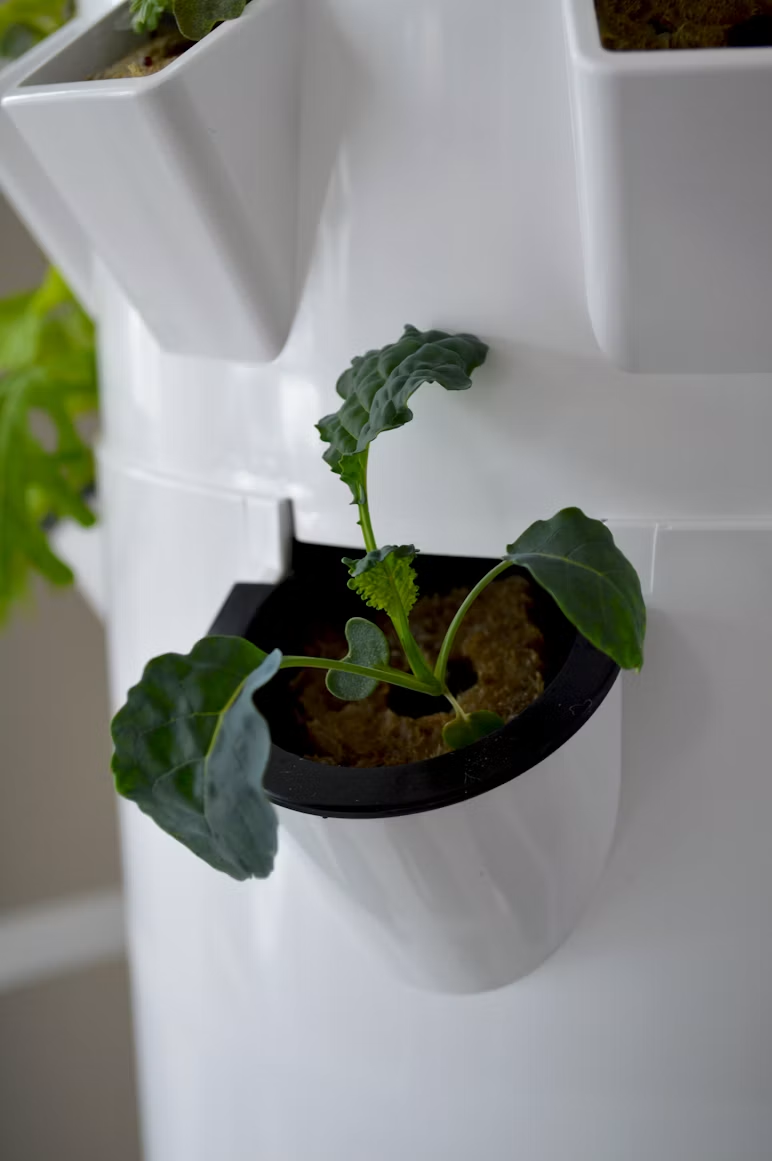
Choosing a first hydroponic setup can be confusing.
You may hear people recommend DWC, while others prefer NFT, and think, “I have no idea what any of this means.” This guide aims to clear up that confusion and help you navigate hydroponics.
First, we will go through the main setups. Then I will help you compare them using five practical decision factors.
Those factors are what crop you want to grow, your available space, harvest amount, amount of effort and budget.
The 6 best hydroponic systems
There are more hydroponic systems than the six below. But if your goal is growing food at home, these are some of the options you are most likely to come across.
Kratky
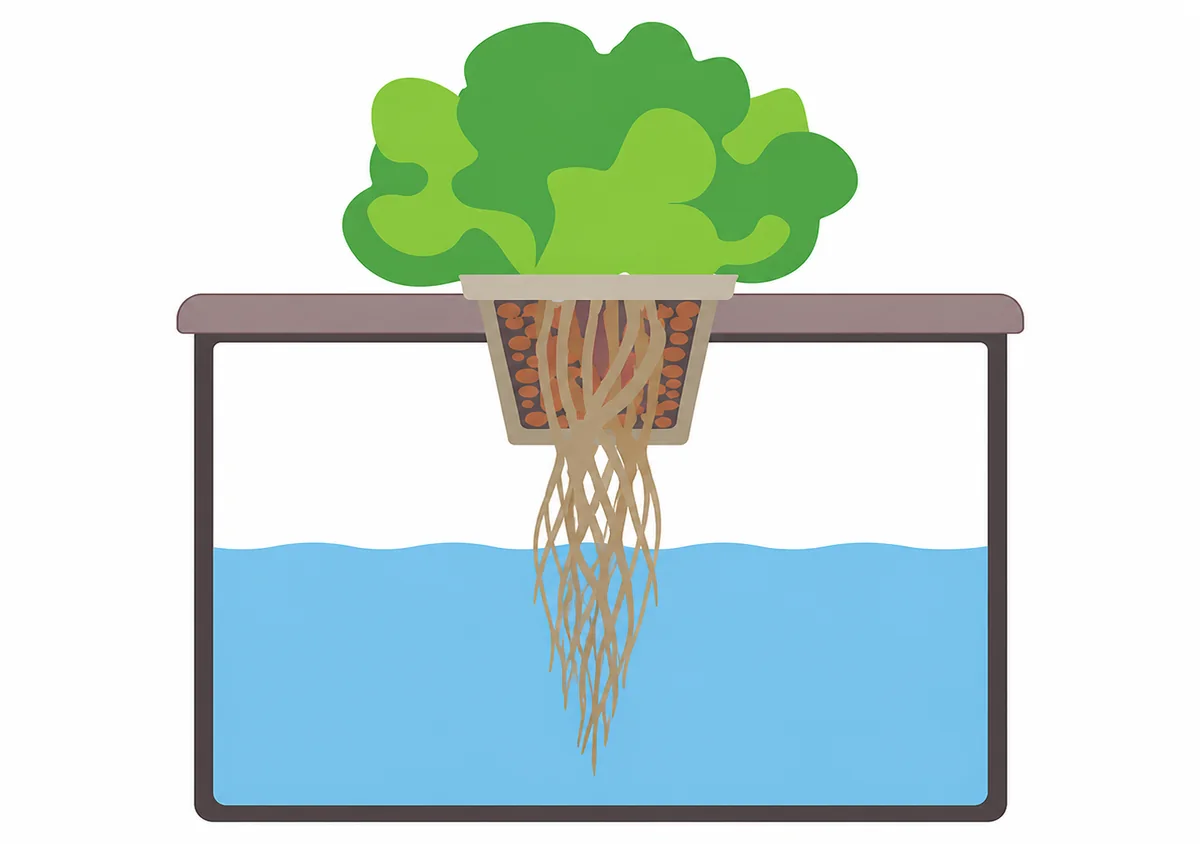
Kratky is hydroponics in its simplest form. There is no water pump, no air pump and no plumbing. The plant sits above a container of nutrient solution with part of its root system reaching the water.
As the plant drinks, the water level slowly falls and creates an air gap. The upper roots use that space to take in oxygen while the lower roots continue reaching the nutrient solution.
Because of their simplicity, Kratky systems are inexpensive. It also means nothing is circulating or aerating the water for you, so you must check regularly to keep the water clean.
- Grows well: herbs and leafy greens.
- Positives: low starting cost, no pump or electricity, and very few components to assemble.
- Negatives: there is a high risk of the water becoming stagnant, and the system is not very sustainable for fruiting crops.
Tower garden
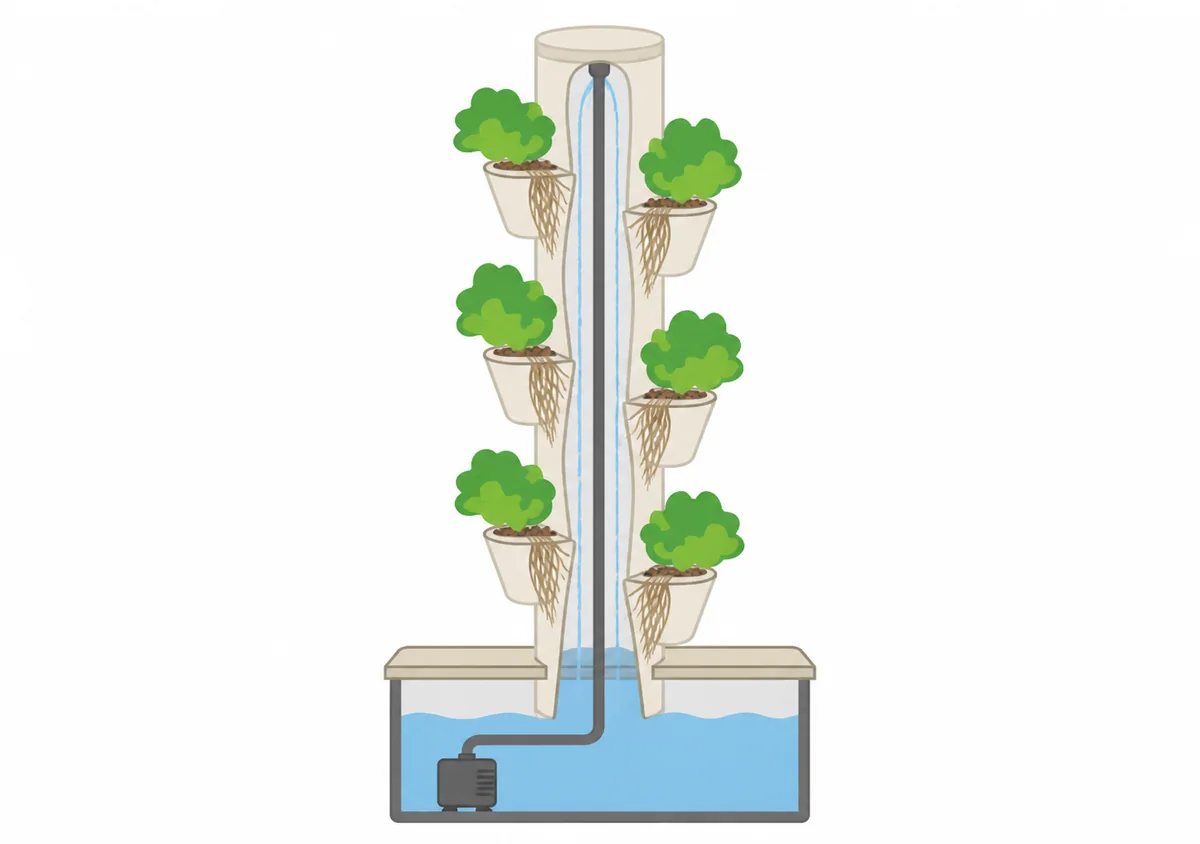
A tower garden grows up instead of out. Plants sit in pockets around a tall central structure, allowing multiple planting sites within a small floor area.
A pump carries nutrient solution from the base reservoir to the top. The water then travels back down through the centre, wetting the roots before returning to the reservoir to repeat the trip.
This can suit balconies and courtyards where floor space is limited. However, plants at the top may shade those below.
- Grows well: lettuce, herbs, leafy greens and strawberries.
- Positives: fits many plants into a small footprint and can work well on balconies or in courtyards.
- Negatives: takes more effort to clean, relies on a pump, and plants can receive uneven light or water.
Nutrient film technique (NFT)
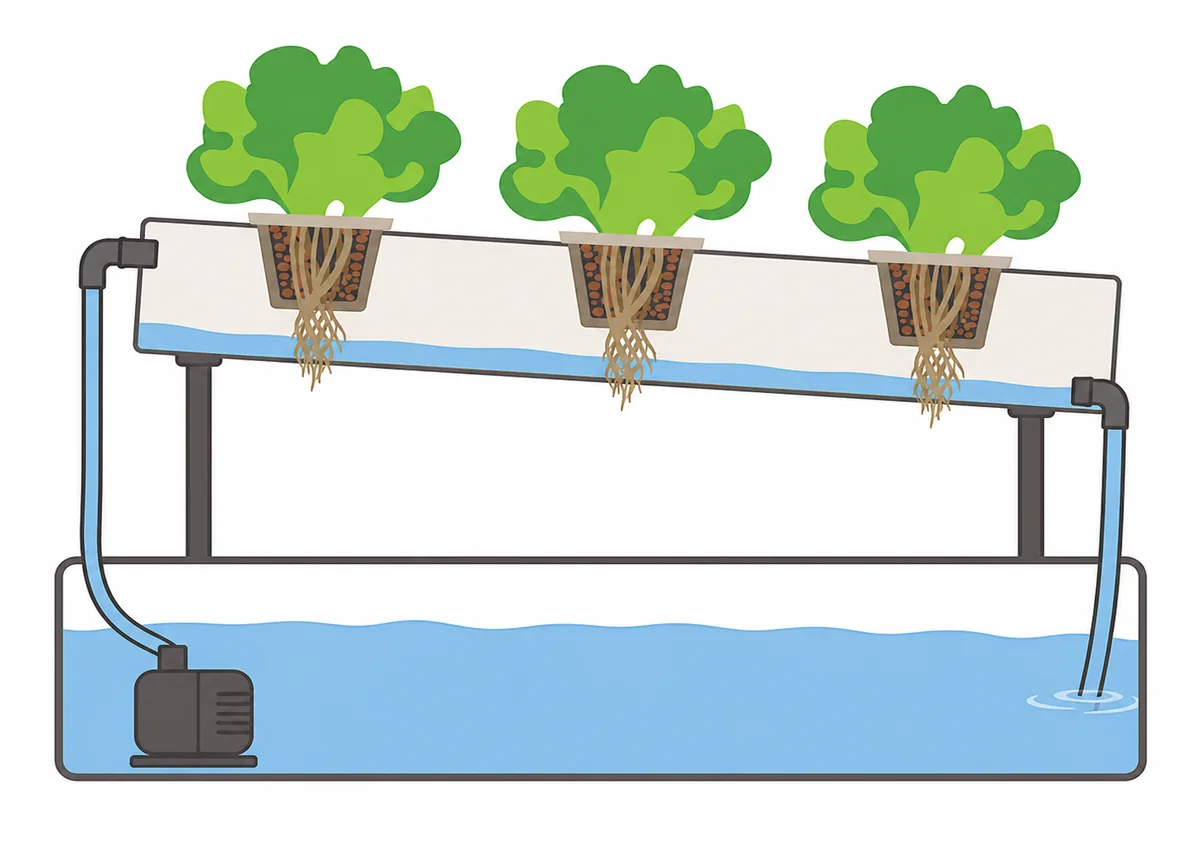
If you have seen rows of lettuce growing from long channels, you were probably looking at NFT. The name stands for nutrient film technique, referring to the shallow layer of nutrient solution that passes beneath the roots.
NFT systems can look quite different, but they all follow the same principle. A timed pump sends a shallow film of nutrient solution through slightly sloped channels feeding the roots. Gravity carries the water back to the reservoir.
Small home systems may have one or two straight channels, while larger systems place several parallel channels beside each other. What changes is the footprint, the number of plants and how the channels are connected. The basic water cycle stays the same.
Stacked NFT systems arrange the channels across multiple levels. They provide more planting sites within a smaller footprint, although the upper rows can shade the plants below and every channel still needs the correct slope and water flow.
The channels themselves also vary. DIY systems often use round PVC pipe, while purpose-built NFT gullies usually have a wider, flatter base that spreads the nutrient film more evenly and gives the roots more room. Some commercial channels also have removable lids, which makes blocked roots and plant debris easier to reach when cleaning.
- Grows well: lettuce, basil, herbs, Asian greens and strawberries.
- Positives: holds many small plants efficiently, recirculates nutrient solution, and makes plants easy to access.
- Negatives: depends on continuous water flow, and large roots can restrict or block narrow channels.
Read more about NFT systems and how their water cycle works.
Deep water culture (DWC)
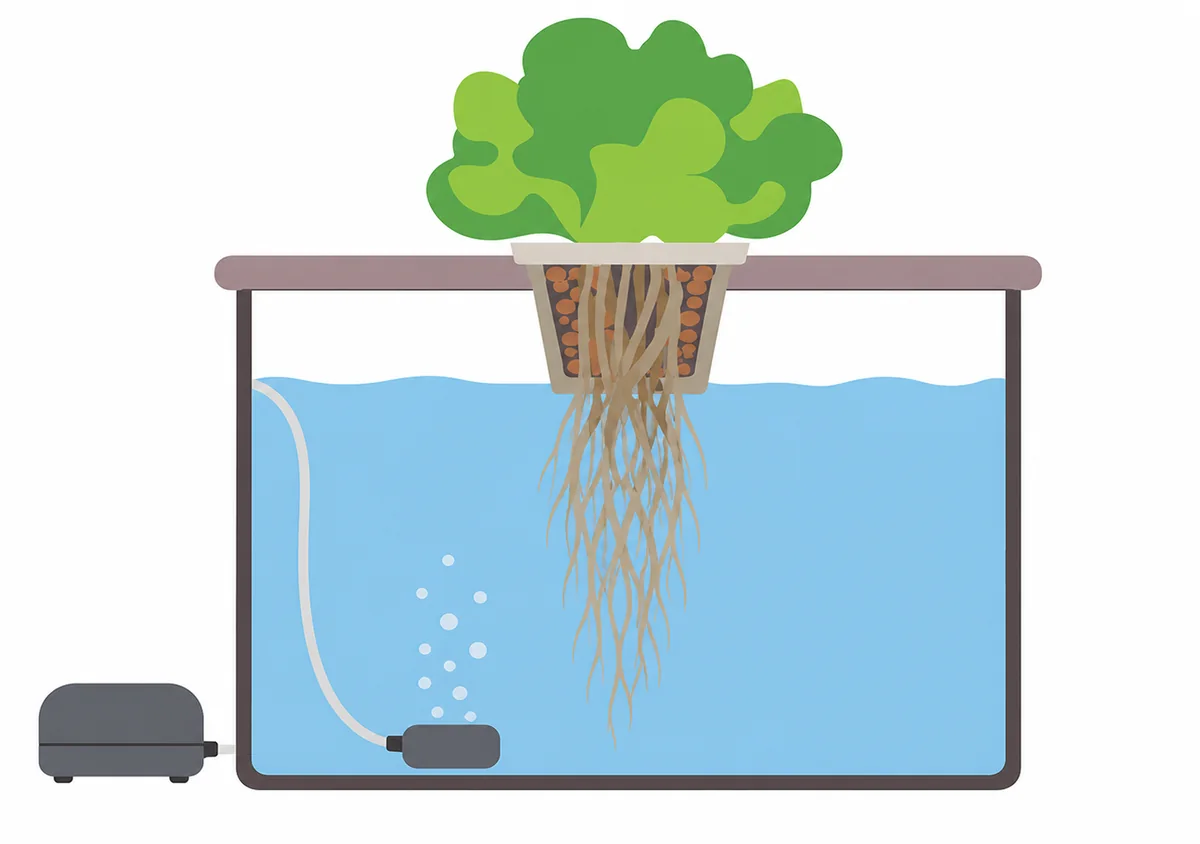
Deep water culture starts with the same basic idea: a plant sitting above a reservoir. The big difference is oxygen!
An air pump pushes air through an air stone inside the reservoir, creating a steady stream of bubbles around the roots. The plant normally sits in a net pot with a small amount of growing media, while most of the roots remain in the nutrient solution.
DWC makes its main components easy to inspect. Lift the lid and you can see the water, roots and air stone. This provides a direct view of what is happening below the plant.
- Grows well: leafy greens, herbs, Asian greens and fruiting plants.
- Positives: straightforward to understand, versatile, and more forgiving than Kratky.
- Negatives: the air pump must keep running, and reservoir temperature and aeration need attention during hot weather.
Countertop garden
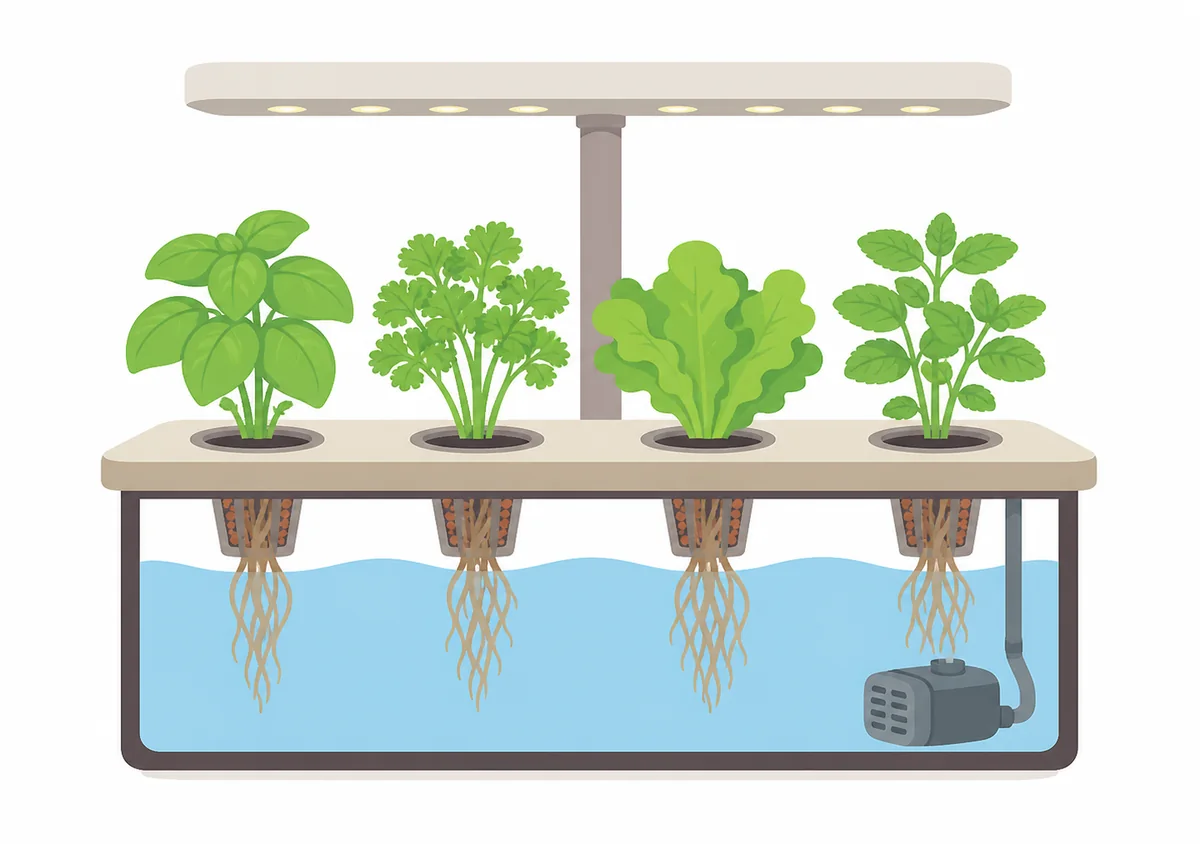
A countertop garden is perhaps the most beginner-friendly of the bought systems.
These systems combine the reservoir, grow light, pump and timer into one unit, so the components do not need to be sourced separately.
The planting pods sit above a shared reservoir and the built-in light runs on an automatic schedule. Depending on the model, a small pump circulates or aerates the water in the background.
These systems are good for smaller kitchens or living areas because they are compact and have less exposed tubing and cabling than other setups.
- Grows well: herbs, lettuce, leafy greens, strawberries and some dwarf fruiting varieties.
- Positives: integrated lighting and circulation, a compact indoor format, and minimal setup decisions.
- Negatives: higher cost per plant, limited room for mature crops, and some models rely on brand-specific parts.
Benchtop products we recommend:
- Maxkon: Maxkon 12-Pod Hydroponic Garden
- Vevine: Vevine LED Hydroponics Growing System
Another option to compare: iDOO Hydroponics Growing System.
Drip or Dutch bucket system
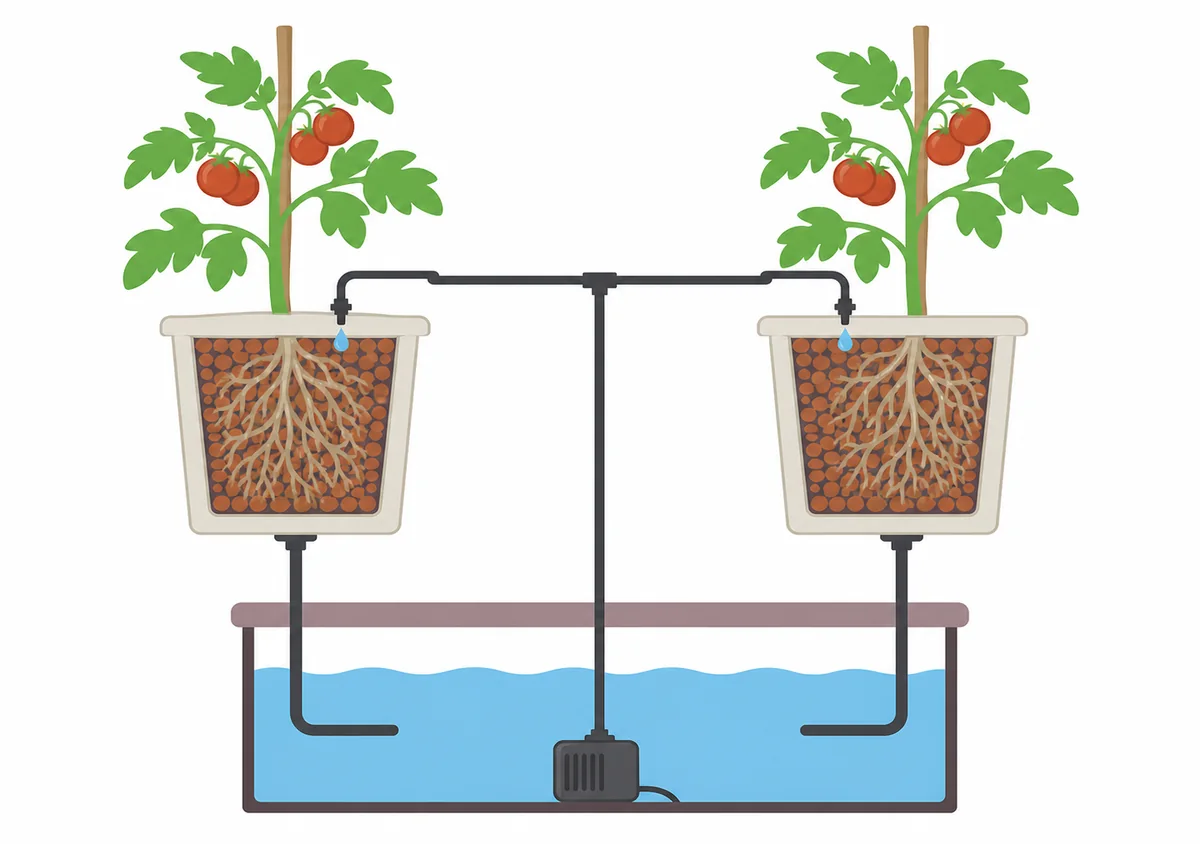
Drip and Dutch bucket systems are commonly used for larger fruiting plants. They give tomatoes, cucumbers and similar crops their own container, root space and support.
Each bucket is filled with a growing medium such as clay pebbles or perlite. A small drip line feeds nutrient solution to the plant from above, while a return line can carry the excess back to a shared reservoir.
Because every plant has its own bucket, you can support it properly, check it individually and add more buckets later if your growing plans expand.
- Grows well: tomatoes, cucumbers, capsicum, eggplant and other large fruiting crops.
- Positives: provides generous root space, supports larger plants, and can be expanded one bucket at a time.
- Negatives: requires more plumbing and equipment, with more opportunities for drippers to clog or connections to leak.
How to choose the right setup
Once you understand the main systems, the next step is to compare them against your own needs.
The five variables below can help you narrow down the options.
What do you want to grow?
This is the first question for a reason. A system suited to lettuce can be a poor choice for tomatoes.
Lettuce and herbs can grow in most beginner setups. Tomatoes and cucumbers are a different story: they need more root room, more water and enough physical support to hold a mature plant.
- Lettuce and Asian greens: Kratky, DWC and NFT are all suitable.
- Herbs: try Kratky, a small DWC system or a countertop garden.
- Tomatoes, cucumbers and capsicum: consider a large DWC bucket or drip-fed bucket with strong support.
- Strawberries: NFT, towers and drip systems can work when the crowns stay dry.
- Microgreens: use shallow trays rather than a conventional hydroponic system.
Want to grow very different crops? Two simple systems may be easier than forcing everything to share one reservoir.
Where will the system live?
Before choosing a system, decide where it will be placed. Measure the width, depth and height—not just the patch of floor.
A tower uses very little floor space but may be far too tall for a kitchen. A countertop garden looks compact online and can still take over more bench space than expected.
And then there is light. Indoors, you need room and budget for a suitable grow light. Outdoors, think about direct sun, rain, access to power and how Australian growing temperatures could affect the water in your reservoir.
How much do you want to harvest?
Are you hoping to snip a little basil for dinner, or keep a household supplied with salad greens every week? Those are two very different jobs.
Decide whether you want an occasional harvest, regular weekly produce or enough plants to share. Then be careful with planting-hole counts.
A system may technically hold many seedlings and still become crowded once those lettuces, herbs or fruiting crops reach full size. Count mature plants, not empty holes.
How hands-on do you want to be?
“Easy” means different things to different growers. Some people want the fewest possible components. Others prefer to pay more for a timer and pump to do the repetitive work.
The ranking below considers setup, routine checks, cleaning and the amount of automation.
Most hands-on to least hands-on:
- DIY systems — most hands-on: require sourcing, assembly and more problem-solving.
- NFT and towers — highly hands-on: have pumps, water pathways and more surfaces to inspect and clean.
- DWC — moderately hands-on: requires reservoir checks and an air pump that must keep running.
- Kratky — less hands-on: has very few components, but the water level and temperature still need checking.
- Countertop garden — least hands-on: usually automates lighting and water circulation.
What is your complete budget?
The price on the system is rarely the final price. A working setup may also need nutrients, pH testing, growing media, seedlings, pumps, timers and lighting.
This is how a cheap-looking frame can become an expensive project. Add up the complete setup before comparing options.
Check how many mature plants the system can realistically hold and whether replacement parts are easy to buy in Australia. A low purchase price matters less when a small replacement part is difficult to obtain.
What matters most to you?
People with the same crops, budget and available space may still choose different systems because their priorities differ.
You may want the lowest possible cost, the smallest amount of maintenance, the biggest harvest or something suitable for a visible indoor space. You may prefer building a system yourself or choosing a complete kit with fewer setup decisions.
Either approach can work. Choose based on the amount of setup and ongoing maintenance you are willing to manage.
Match the setup to your needs
No system suits every grower. The factors above can be used to narrow the options.
Use these as starting points rather than rigid rules:
Choose Kratky if...
You want the least expensive way to try lettuce or herbs and do not mind keeping an eye on the reservoir.
Choose a tower garden if...
Your floor space is limited, plant capacity matters and you are prepared for additional cleaning.
Choose NFT if...
You want several leafy plants growing at once and are comfortable relying on a circulating pump.
Choose DWC if...
You want visible components and enough flexibility for leafy greens, herbs and some compact fruiting plants.
Choose a countertop garden if...
You want to grow herbs or greens indoors and convenience matters more than cost per plant.
Choose a drip or Dutch bucket system if...
Tomatoes, cucumbers or capsicum are your priority and you have enough room to support mature plants.
Next steps
At this point, you may have narrowed the choice to one or two systems. You can now compare their specific requirements.
Before buying, check the complete equipment list, mature plant capacity and whether the routine maintenance fits the time you can regularly commit.
If you prefer to work through these factors one at a time, the GrowACrop quiz uses the same criteria.